What are Flock cameras, other ALPRs looking for?
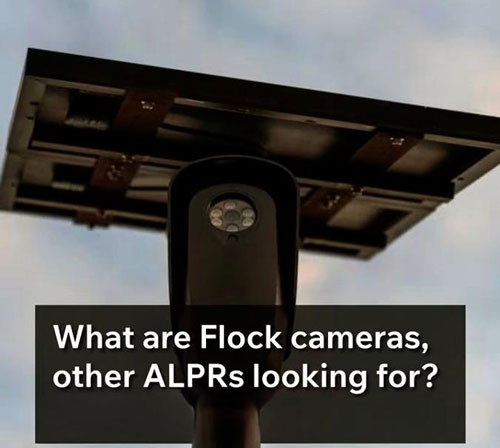
Flock Safety cameras, automated license plate readers (ALPRs), and other similar devices have attracted backlash from around the country in recent months.
While Flock may be the name that immediately comes to mind for you when you hear of ALPRs, they aren’t the only technology available, nor the first of their kind.
They all, however, are generally looking for the same information. That includes a vehicle’s license plate and its make, model, and color.
Flock claimed its readers can “capture vehicles traveling up to 100 MPH, day and night, and up to 75 ft away.” Its technology can also categorize vehicles based on whether it is a resident or non-resident vehicle, if it has a temporary or standard plate, and if there is damage or alterations, like a broken taillight.
While a Flock camera cannot determine if you are speeding, Genetec’s ALPR system is capable of providing the estimated travel speed of a vehicle.
Motorola Solutions, which comprises about 5% of the ALPR locations tracked by DeFlock, said its technology can identify “accessories and even unique vehicle features like damage or bumper stickers.”
Flock cameras “take a point-in-time image of the rear of vehicles on public roadways,” so they aren’t able to track every vehicle or person in a jurisdiction, just capture the ones that pass in front of their view.
If you’re curious about which cameras are near you, you can take a look at DeFlock’s crowd-sourced map of ALPR locations around the U.S.
“Camera locations come from volunteers and the OpenStreetMap community, not a private company or government agency,” DeFlock said.
ALPRs have been in use for “well over two decades,” according to a report from the U.S. Department of Homeland Security. You can see ALPRs attached to poles, streetlights, and overpasses, though there are also mobile options available.
They’re capable of scanning license plates and comparing them in databases, which can then alert law enforcement if a sought-after vehicle is detected. Law enforcement can also review captures to search for vehicles and share information with other agencies.
However, some agencies have been instructed to stop using ALPRs. Communities in North Carolina, Indiana, Colorado, Wisconsin, and more have taken action to discontinue the use of such devices. The Florida Department of Transportation has started removing cameras from state highways and Texas has pulled state funding for the program following privacy concerns, misuse accusations, and, in Florida’s case, “surveillance schemes.”