Tennessee bill rekindles debate over prayer in public schools
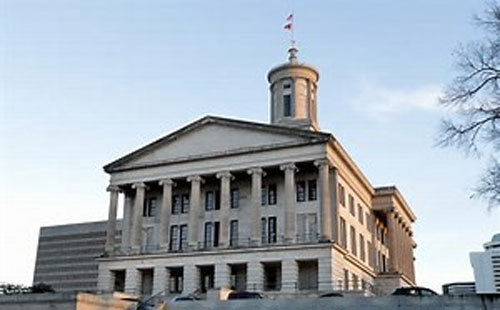
NASHVILLE, Tenn. (WKRN) — Prayer in public schools has been debated for generations, not over whether students may pray, but over how far government should go in regulating religion in the classroom.
The longstanding question is resurfacing at the Tennessee State Capitol, where Republican state Rep. Gino Bulso has introduced legislation challenging the modern interpretation of the separation of church and state.
Bulso’s bill argues that the principle of separation has drifted from its original intent and now restricts religious expression rather than protecting it. Supporters of the proposal said the result is not neutrality, but discrimination, treating religion as something to be excluded from public life instead of being accommodated.
“It’s pushing the envelope,” said David Hudson, a constitutional law professor at Belmont University. “He’s going farther than that by suggesting the entire body of Supreme Court decisions after 1947 interpreting the Establishment Clause is wrong.”
The Establishment Clause of the First Amendment states that Congress shall make no law respecting an establishment of religion. Courts have long interpreted that language as limiting government involvement in religion while still allowing individuals to freely practice faith.
Supporters of Bulso’s bill argue that recent applications of that principle have gone too far, creating an environment where religious expression is discouraged in public schools.
Opponents disagree, saying the Constitution requires government neutrality, particularly in a religiously diverse society.
“In a pluralistic country, you cannot have one-size-fits-all prayer,” Hudson said. “That’s part of why the separation exists.”
House Democrats echoed that argument, pointing to what they say is already happening in Tennessee schools. In a statement to News 2, Senate Democratic Caucus Press Secretary Brandon Puttbrese said:
Tennessee public school students are already free to pray and study the Bible. No one is stopping them. In fact, there are student-led Bible study clubs already happening in the district he represents.
Instead of chasing problems that don’t exist, a better use of the legislature’s precious time would be to address the K-12 school funding crisis. Tennessee ranks 47th in public school student spending. That’s a real problem.
Newer religion-in-education cases have worked their way through the courts. Hudson said the bill may be designed to test how far that shift could go.
“It may be trying to introduce something that, if passed, is challenged,” he said. “And that would force courts to deal with recent Supreme Court precedent that has lowered the church-state separation barrier.”
Lawmakers return to session on Tuesday. For the bill to become law, it must be referred to committee, pass hearings and votes in both the Tennessee House and Senate, and ultimately signed by the governor.